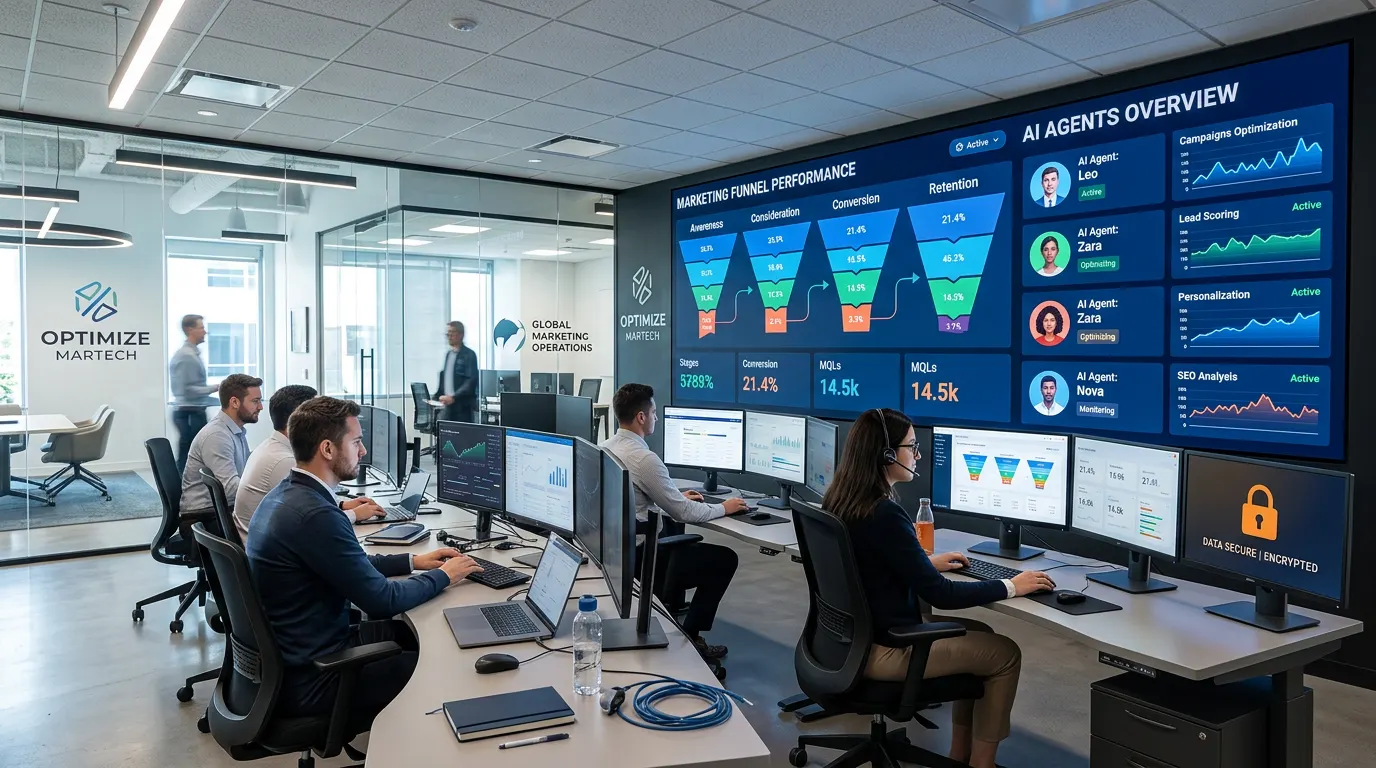
Scaling enterprise marketing automation with AI agents: governance, security, and measurement
Enterprises that pursue enterprise marketing automation now face a new inflection point: AI agents that can design campaigns, execute omnichannel workflows, and personalize at scale. This whitepaper explains how to deploy AI-driven automation safely, measure its business impact, and govern it from a security and compliance perspective.

In this paper you will learn:
How AI agents differ from traditional automation and where they add value.
Governance and security controls required for enterprise deployments.
Measurement frameworks and KPIs to prove ROI.
Real, practical steps and common mistakes we see in the field.
Quick answer: Enterprise marketing automation combined with AI agents delivers scale, speed, and personalization but requires explicit governance, role-based data access, secure integrations, and event-level measurement to be safe and measurable. Start with a pilot, lock down data flows, and instrument outcomes before broad rollout.
Why enterprise marketing automation needs AI agents now
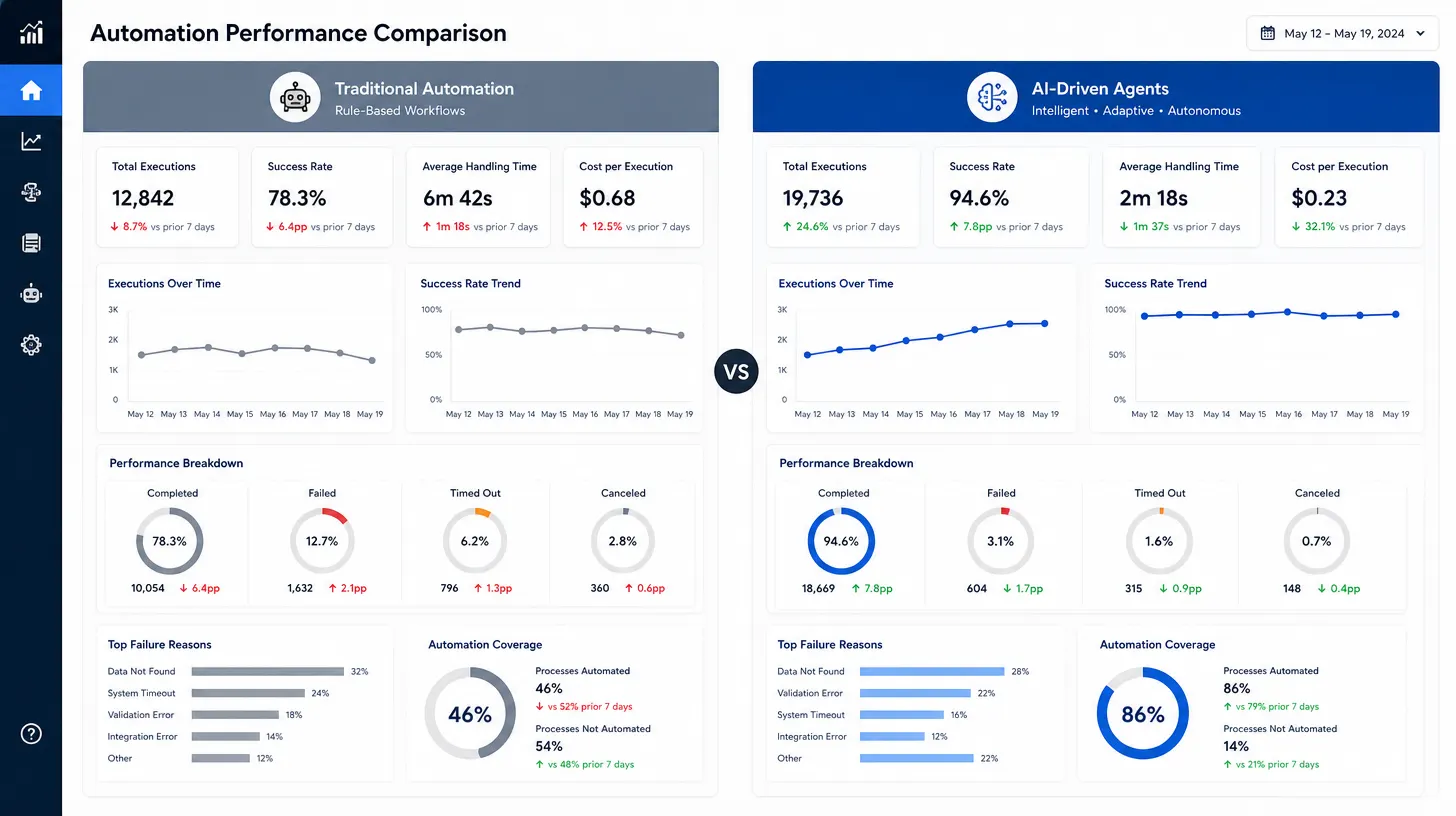
Traditional automation excels at rule-based tasks: triggered emails, scheduled ads, and drip nurturing. AI agents add capability by interpreting unstructured signals, generating content, and orchestrating multi-step decisions across channels.
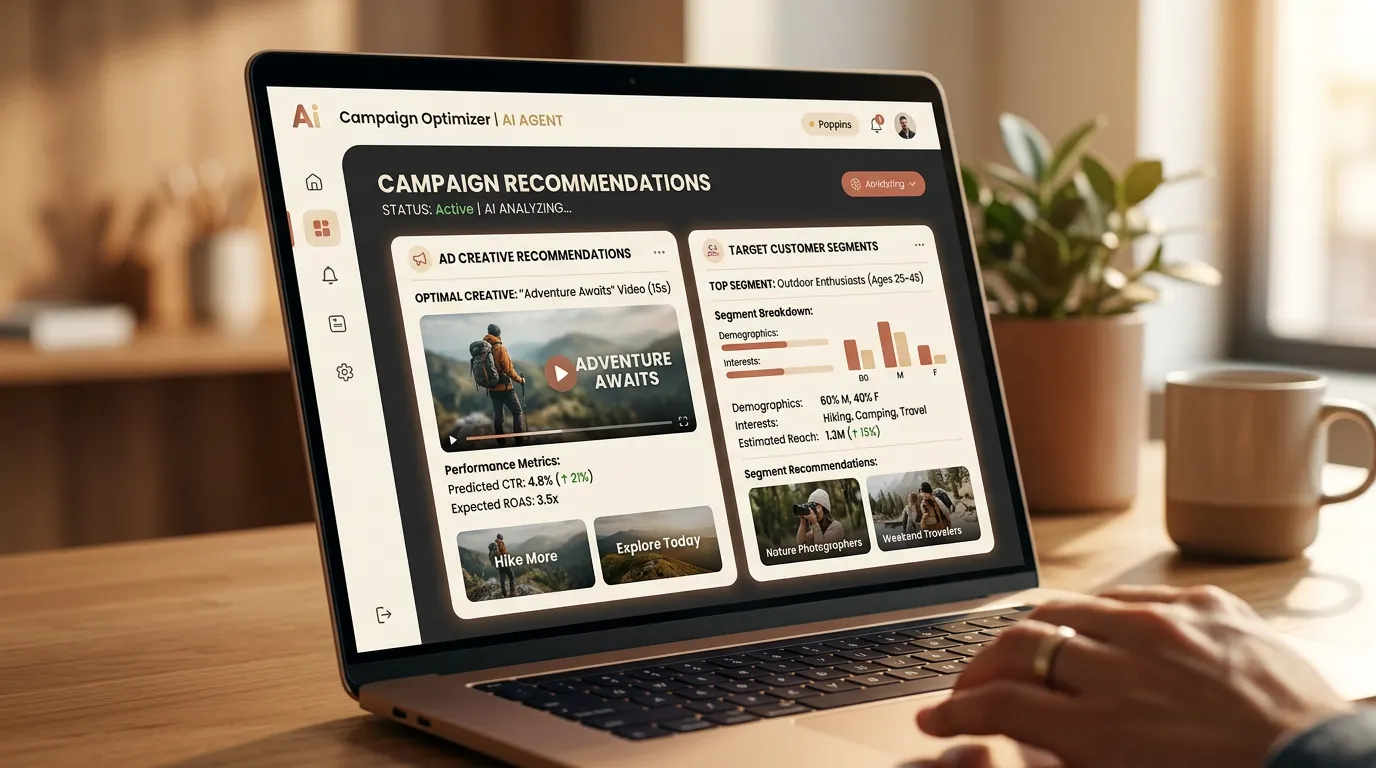
Use cases where AI agents outperform traditional logic include dynamic creative optimization, adaptive journey branching, and continuous lead scoring that updates with streaming data. They reduce friction between marketing and sales and can shorten the buyer’s time-to-close.
When to prefer AI agents
High-volume multi-channel personalization across regions and languages.
Continuous optimization with live learning (e.g., creative, bids, messaging).
Cross-system orchestration—CRM, ad platforms, CMS—where decisions depend on many signals.
Governance and security for enterprise marketing automation
Governance and security are non-negotiable for enterprise marketing automation. Policies must define what agents may do, which data they can access, and when human approval is required.
Core governance controls
Role-based access control (RBAC) and least-privilege policies for all AI agents and integrations.
Change logs and immutable audit trails for campaign actions and data queries.
Approval gates for high-impact changes (pricing, public content, audience exclusions).
Data retention and deletion policies aligned with privacy regulations.
Security checklist
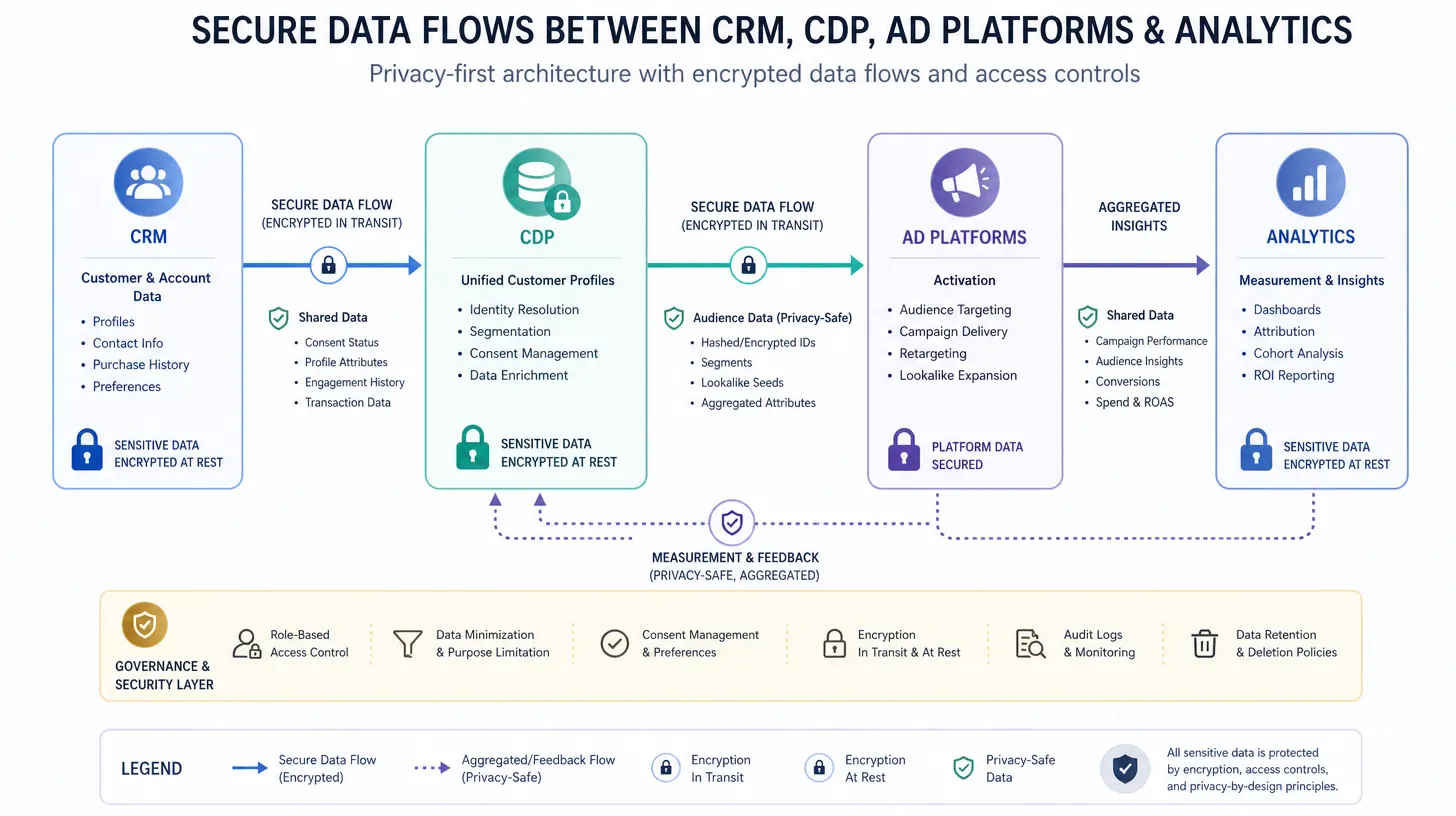
Encrypt data at rest and in transit; enforce strong API authentication.
Limit PII exposure to agents and mask tokens in logs.
Run periodic red-team reviews and penetration tests on the automation stack.
Map data flows between CRM, CDP, ad platforms, and analytics to verify boundaries.
Integrations and CRM fit: avoid common pitfalls
Enterprise automation only works when data moves reliably. Common mistakes include point-to-point integrations that create brittle dependencies, duplicated lead records, and unsynchronized audience segments.
Best practice: centralize identity and profiling in your CRM or CDP, enforce canonical IDs, and design an integration layer that standardizes events and schema.
For enterprise buyers evaluating platforms like HubSpot Marketing Hub or Sales Hub Enterprise, assess connector maturity, event hubs, and how the tool supports HubSpot Enterprise vs Professional differences in governance and limits.
Practical integration steps
Create a canonical contact record and source-of-truth rules.
Use webhook-based event streaming for real-time decisions.
Deploy middleware or an event bus to decouple systems.
Need help mapping your systems? Kazi Agency offers CRM & pipeline management and marketing automation services to design stable integrations and governance.
Measurement: how to prove value for enterprise marketing automation
Measurement should combine marketing outcomes with operational metrics. Tie campaign signals to pipeline events and revenue outcomes, and monitor agent performance and safety metrics.
Core KPIs
Business KPIs: pipeline created, influenced revenue, close rate lift.
Operational KPIs: lead response time, workflow error rates, agent decision accuracy.
Safety KPIs: unauthorized data accesses, content-review failures, audit exceptions.
Attribution and analytics layer
Use an event-level attribution model captured in a unified analytics layer. The layer should store channel events, agent actions, and CRM outcomes to enable flexible queries and ML-backed attribution.
Metric Type | Example | Why it matters |
|---|---|---|
Business | Pipeline created ($) | Direct link to revenue impact |
Operational | Lead response time (minutes) | Correlates with conversion and customer experience |
Safety | Unauthorized access attempts | Regulatory and reputational risk |
For enterprises using HubSpot Marketing Hub or considering HubSpot Enterprise pricing, inspect the available analytics features, attribution models, and whether attribution exports are possible for your central analytics stack.
Real experience: what Kazi Agency has seen and delivered
We implement enterprise-scale automation and observe recurring patterns in successful deployments. Below are real, verifiable outcomes from Kazi Agency engagements.
TechStack Pro (B2B SaaS): 284% more qualified leads, a $2.1M pipeline, a 41% lift in close rate, and each rep saved 12 hours per week in four months. (Case study.)
Apex Wellness Group (health & wellness): 217% more bookings, lead response time reduced from 6+ hours to 4.2 minutes, no-shows reduced 58%, and $180K recovered in five months. (Case study.)
Premier HVAC Solutions (home services): 312% organic traffic growth in six months and 89 new leads per month, demonstrating how automation plus SEO powers the top of funnel. (Case study.)
Common mistakes we see: skipping an initial event schema design, neglecting human-in-the-loop rules for creative changes, and failing to instrument rollback paths. Practical tip: implement canary releases for agent-driven campaigns and monitor rollback triggers.
Implementation roadmap: pilot to enterprise rollout
Follow a staged approach to reduce risk and demonstrate value quickly.
Pilot (6–12 weeks): select a single use case (e.g., lead qualification or ad creative optimization). Lock data access and define clear success metrics.
Scale (3–6 months): expand to more segments and channels once safety and measurement are validated.
Govern & Operate (ongoing): formalize RBAC, change management, and continuous monitoring.
For many enterprises, choosing the right vendor is critical. Look for proven integrations with your CRM and an audit-friendly architecture—if you want an objective review, try Kazi Agency’s Free AI Business Audit to map gaps and prioritize next steps.
Choosing tools and vendors: what to evaluate
Top evaluation criteria include security posture, integration maturity, analytics/export capabilities, and vendor support for governance workflows. If you’re comparing platforms like HubSpot Marketing Hub, ask about enterprise features, data model limits, and how easy it is to enforce approval gates across teams.
Security certifications and SOC/ISO status
Event-level export and data retention controls
Support for RBAC and audit logs
Vendor roadmap for AI agent capabilities
Quick vendor comparison (high level)
Capability | Traditional Automation | AI Agent-enabled Automation |
|---|---|---|
Decisioning | Rule-based | Probabilistic and adaptive |
Scaling | Manual workflows | Autonomous orchestration |
Governance | Simple approvals | Needs stronger audit & controls |
Conclusion: safe, measurable enterprise marketing automation
Enterprise marketing automation powered by AI agents can deliver real scale and measurable revenue, but only if governance, security, and measurement are baked into the design from day one. Start with a constrained pilot, enforce RBAC and audit trails, and instrument a central analytics layer to prove impact.
If you’d like a pragmatic plan tailored to your stack, Book a free strategy call with Kazi Agency to review your systems, map risks, and prioritize a pilot. Book a Free Consultation
Additional resources: learn about our Marketing Automation Services and integrated Analytics & Reporting offerings that support enterprise deployments.
Frequently Asked Questions
What is automation in digital marketing?
Automation in digital marketing uses software to perform repeatable tasks—email sends, ad bidding, lead scoring, and personalization—so teams can scale campaigns, respond faster to buyers, and measure results. It reduces manual work and enables consistent, data-driven customer journeys.
What does enterprise marketing mean?
Enterprise marketing refers to marketing activities at scale across many products, regions, and buyer segments. It requires centralized governance, multi-team workflows, enterprise-grade tools, and data controls to maintain brand consistency while supporting local variations.
What are the four types of marketing management?
Common marketing management types are strategic, product, brand, and operational/marketing-mix management. Enterprises also add category, channel, and campaign management to coordinate complex cross-functional programs and technology stacks.
What are the top 5 marketing automation tools?
Top enterprise tools vary by need, but commonly cited platforms include Adobe Marketo Engage, HubSpot Marketing Hub (Enterprise), Oracle Eloqua, Salesforce Marketing Cloud, and Pardot. Tool choice depends on CRM fit, scale, and governance requirements.
Kazi Agency Team — AI marketing automation and CRM specialists helping SMBs scale lead generation